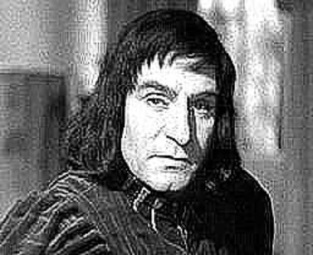
Machiavelli has had some bad press. His treatise, “The Prince”, is seen as a ‘road-map’ for any leader seeking and wanting to hold on to a position of power. To be Machiavellian came to mean someone who would use any means available to achieve personal advancement. The means usually are expected to include a ruthless and deceptive manipulation of others with little regard for their physical or psychological wellbeing.
This ‘instrumental-approach’ is encapsulated in the phrase, “The ends justify the means”, and can be justified using the moral philosophy of utilitarianism, which considers that actions are justified if the outcome(s) maximizes the good and/or minimizes the bad. From the utilitarian perspective, amoral (indeed immoral) acts can be justified if they bring about an outcome that is beneficial for the majority. The suffering of a minority is the price to be paid for maximizing the well-being of the majority.
Machiavelli was writing in a particular historical epoch and at a time when the political environment was turbulent. His advice for would-be Princes included the use of violence and coercion in order to seize power. The Prince’s new position as leader could then be secured by adopting a kind of amoral politics that relied on expediency; employing fair or foul means to achieve ultimate goals. The explicit objective would appear to be success and aggrandizement of the principality, however, the hidden agenda would be the self-promotion, the enhancement of personal power and the accumulation of self-centered rewards.
This definition of a ‘Machiavellian’ thus not only includes the willingness to act in deceitful and immoral ways to achieve certain ends, but also that this cunning and duplicitous behaviour is not undertaken for the common good. The modern Machiavellian therefore cannot use the moral philosophy of utilitarianism to hide behind, because the dubious means being employed are for selfish reasons; ultimately the goal for the true Machiavellian is self-promotion.
The study of Machiavellianism has recently been supplemented with additional discussions that include Narcissism and Psychopathy and their impact in the workplace and society in general. The three personality traits have rather extravagantly been identified as “the dark triad” (e.g. Paulhus & Williams, 2002) and treated as a sub-clinical set of behaviours from the DSM-IV (e.g. Hogan & Hogan, 2001).
The study of “the dark triad” and its impact in the workplace has now entered into the mainstream of organizational research (e.g. see review by Spain, Harms, & LeBreton, 2014).We can also see dark personality research becoming widely published in books targeted at mass audiences. The popularity of books detailing the impact of narcissism (e.g. Maccoby, 2003), psychopathy (e.g. Paulus et al, 2002), in the workplace and society in general illustrates that there is a growing interest in trying to understand the behaviour of individuals with these dysfunctional characteristics.
An important distinction has been made by Hogan & Hogan, (2001), between the “dark triad” and the clinical pathologies of Narcissism and Psychopathology described in the DSM IV. However, the ‘dark’ traits are not just extreme variants of ‘normal’ personality characteristics and although there are some similarities between the ‘dark’ traits and dimensions of the ‘Big-Five’ models (see Guenole, 2014), the “dark triad” behaviours are characterized by behaviour that is outside the norms and expectations of the majority in society. Specifically, there is a spectrum of behaviours that are ‘suspect’ in-so-far that any moral or ethical value is absent. The motivation underpinning the ‘dark’ personality characteristics is a powerful and pervasive drive, (which may well be subconscious), to exaggerate self-worth at the expense of others.
Thus, the behaviours associated with the ‘dark triad’ seem to directly contradict the universal moral principle – the Golden Rule[1], which appears across history as the Law of Reciprocity in different religions and cultures. The Golden Rule is the cornerstone of most ethical systems and encompasses concepts such as empathy, selflessness and egalitarianism.
Generally, it is taken as a given that the appearance of the ‘dark triad’ of personalities within organizations is a bad thing. Individuals possessing these traits are deceptive and manipulative. Moreover, anyone and anything is ruthlessly ‘used’ in order to achieve personal goals; literally they would “über Leichen treten“[2] to fulfil their hidden desires for personal aggrandizement.
The spectrum of ‘dark triad’ behaviour covers a range of ‘insensitive’ ways of interacting socially using aggression and coercion to achieve personal goals. In organizations such behaviour destroys open communication and teamwork, whilst also eroding individual motivation and engagement and increasing levels of stress and discomfort at work. At one extreme end of the spectrum lies unethical and amoral behaviour. This involves criminal activity such as fraud, theft and sexual harassment.
Thus the ‘dark triad’ is usually associated with a certain type of employee, more intent on self-advancement than concentrating on the job-at-hand. Typically, individuals with these traits will use cunning and duplicitous behaviour to ‘climb-the-ladder’ at the expense of fellow co-workers or the general good of the company. However, they are not always immediately regarded as ‘poisonous’ by everyone. As part of their cunning and deception, these employees will often be perceived as charming by ‘useful’ comrades and seen as having ‘leadership potential’ by those above their level in the organization’s hierarchy.
Thus the ‘dark-triaders’ have ‘something about them’ that make them both disarming and appealing, and in this respect, it is not a coincidence that this array of personality traits have been found in successful leaders. The behaviour, which is seen as risky, but successful, often attracts the label “charismatic”.
This paradox of finding dysfunctional traits in successful individuals is solved by asking the question “Successful for whom?” The successful ‘dark-triad’ business leader will uses manipulation tactics for his or her own success, and not that for the success of the business as a whole, although this may happen in the short-term. Here, it should also be noted that the successful ‘dark-triader’ requires a suitable environment in which to flourish. The most fitting environment seems to be a hierarchical power-structure that provides potential ‘ladders’ to climb. It is possible that Machiavellians will not do so well in ‘flat’ organizations that have cultural values of participation, teamwork and a mutuality of decision-making.
Examining the ‘dark-triad’ in detail, we have:
Characteristics of Machiavellians
- Machiavellians are skilled at deception. They have an ability to lie convincingly.
- Machiavellians are very adept at hiding their true feelings and can appear to be calm when experiencing conflicting emotions.
- Equally, Machiavellians are able to show passion or anger whilst feeling none of the accompanying physiological or psychological arousal.
- It follows that Machiavellians are good actors. They can slip into any role to suit any occasion.
- Machiavellians are usually arrogant and consider others somehow ‘less’ than them. It is therefore easier for Machiavellians to treat people as ‘cogs-in-the-machine’ or as ‘pawns’ on a chess board. Machiavellians have little empathy with others and their relationships tend to be ‘functional’ rather than emotional.
- Deceiving others is acceptable.
- Harming others (psychologically or physically) is acceptable e.g. workplace bullying and harassment.
- Use of the normal emotional responses of others as a control device e.g. “If you do not do as I want, you will no longer be my friend!”
Characteristics of Narcissists
- An obvious self-focus; an egocentric perspective on everything.
- Lack of empathy/emotional intelligence.
- Tends to overwhelm/envelop others as if extensions of their narcissistic self-image.
- Hypersensitive to any insults or imagined insults.
- Vulnerable to feelings of shame but seldom feelings of guilt.
- Pretentious and arrogant.
- Needs to be constantly regarded as “the expert” in all things.
- Uses other people in a functional way, without any consideration for their well-being.
- Use of others emotions as an instrumental-conditioning contingency i.e. rewards and flattery for those who meet their narcissistic needs, rejection and contempt for those not recognizing their ‘superiority’.
Characteristics of Psychopaths
- Lack of empathy
- Impulsive risk-takers who do what they want in the moment. An almost childlike drive for immediate gratification, without any thought (or feeling) for the consequences.
- Insensitivity leads to a lack of negative feelings about inappropriate behaviour. Experience low levels of anxiety, shame and/or guilt.
- Lack of usual emotional responses to their actions and/or consequences of their behaviour; decision-making is purely ‘functional’.
Researchers in this area have developed psychometric tests, (employing traditional Likert scales) to measure each of these traits individually, e.g. Dahling et al, (2008). However, Jonason & Webster (2010), created a “Dirty Dozen” scale, which is aimed at uncovering ‘Dark Triad’ behaviours using 12-items. Susan Whitbourne (2013) published the list in a “Psychology Today” article:
Tendency to:
- Manipulate others to get my way.
- Lack remorse.
- Want others to admire me.
- Be unconcerned with the morality of my actions.
- Use deceit or lying to get my own way.
- Be callous or insensitive.
- Use flattery to get my own way.
- Seek prestige or status.
- Be cynical.
- Exploit others toward my own end.
- Expect special favors from others.
- Want others to pay attention to me.
Perhaps recognizing this need for a more manageable measure of the ‘Dark Triad’, Jones & Paulhus (2014), also developed a short-version measure.
A more practical measure of the ‘Dark Triad’ of personality traits seems to be required as more and more researchers are discovering the existence of these characteristics outside the laboratory and clinical settings. Robin Andrews (2015) describes the recent work of Organizational Psychologist Daniel Spurk of the University of Bern, who found that employees agreeing with statements from the “Dirty Dozen” scale currently had more successful career-paths than those who disagreed.
After correcting for other factors, it was found that Machiavellianism was positively correlated to the respondent’s position in the management hierarchy and also, surprisingly, job satisfaction. Additionally, there was a strong positive correlation between the Narcissism-indicators and higher earnings. However, the study found no relationship between Psychopathy-indicators and the study’s criteria for individual ‘successes’ within the organization.
In their review, “The dark side of personality at work”, Spain et al, (2014), the authors discuss the possibility of the ‘dark-side’ having a ‘bright-side’ in the context of certain types of organization. Their starting point is the “Big Five” model of personality, which is underpinned by trait theory. Traits are genetically determined behavioural tendencies or dimensions that are measurable using psychometric questionnaires. Individuals vary by the amount or strength of influence each dimension has in determining actual behaviour and the resulting ‘pattern’ is observed over different times and circumstances and attributed to an individual’s Personality.
The original development of the “Big Five” psychometric test was undertaken by Costa and McCrae in 1978, and has since established its reliability and validity by being used in many studies, during which time, the original authors have produced improved versions of the inventory e.g. see McCrae et al, (2005). The various versions of the test is known generically as the “NEO5” or the “NEO-PI”, and is made-up of 240 Likert scale items, although the shorter version is based on 60 items.
The five major personality dimensions measured are: Neuroticism, Extraversion, Openness, Agreeableness and Conscientiousness. Each major dimension covers a wide range of possible behaviours and an idea of their scope and breadth is presented with an illustrative selection of these facets in the tables below:
Neuroticism (Emotional Stability)
| Hi-energy | Low-energy | |
| Positive behaviours | Affectionate
Sentimental
|
Confident
Assured Calm |
| Negative behaviours | Impulsive
Moody Anxious |
Insensitive
Passionless |
Extraversion
| Hi-energy | Low-energy | |
| Positive behaviours | Merry
Cheerful Assertive |
Introspective
Cautious Careful |
| Negative behaviours | Aggressive
Unruly |
Shy
Unfriendly Impersonal |
Openness
| Hi-energy | Low-energy | |
| Positive behaviours | Expressive
Adventurous Imaginative |
Conventional
Traditional
|
| Negative behaviours | Inner-directed
Unconventional
|
Dull
Uncreative |
Conscientiousness
| Hi-energy | Low-energy | |
| Positive behaviours | Orderly
Helpful |
Reserved
Serious |
| Negative behaviours | Mischievous
Boisterous
|
Disorganized
Careless |
Agreeableness
| Hi-energy | Low-energy | |
| Positive behaviours | Enthusiastic
Warm Kind |
Unaggressive
Relaxed |
| Negative behaviours | Individualistic
Domineering Forceful |
Temperamental
Conformity |
By analyzing the cluster of behaviours encompassed by each dimension in this way, we can see that the relationship between a high score and a low score is not straightforward. Although the measuring scale for each dimension is deceptively simple and generates a number that is considered ‘high’ or ‘low’ depending previous norming, the meaning is unclear e.g. a high-score on ‘Agreeableness’ could be indicating an enthusiastic individual or equally someone with a domineering personality.
These contradictions exist in the domains of the other dimensions as well e.g.
Emotional stability Confident or Passionless
Extraversion Assertive or Aggressive
Openness Conventional or Dull
Conscientiousness Helpful or Mischievous
So here we have the five major dimensions of personality being measured by an established, psychometrically robust instrument (the NEO-PI) and we find that the meanings of the scores are ambiguous! This is line with earlier criticism of the NEO5 that the original Costa & McCrae model is atheoretical (Janis, 1995), and only measures 57% of known trait variance (Boyle, 2008). Furthermore, Ben-Porath and Waller (1992) pointed out that the NEO-inventory lack any controls for social desirability or honesty.
From this, we can suspect that the original NEO5 is failing to measure all of an individual’s personality or at least is presenting the results in a skewed or positive fashion. The negative interpretations of the NEO5 traits remain hidden because of an original flaw in the lexical-analysis. Furthermore, these negative traits do exist and lie within the normal range of behaviours. They do not belong in any ‘personality-disorder’ category as described in the more sensational descriptions of the ‘dark-triad’. The negative characteristics belong to behaviours that are perceived as such in particular circumstances or environments.
In terms of organizational behaviour, we should be taking the culture of the organization into account. Similar behaviour will be attributed to different personality traits according to the culture or atmosphere in which it occurring e.g.
| Behaviour | Interpretation in a non-hierarchical, non-political, informal atmosphere | Interpretation in a hierarchical, political, formal atmosphere |
| Forceful | Impulsive or Impatient | Aggressive or Domineering |
| Individualistic | Hard-headed | Ruthless |
| Confident | Assertive | Competitive or Ambitious |
| Popular | Charming | Charismatic or Persuasive |
When we are labelling a similar behavioural-repertoire as ‘Individualistic’, ‘Self-centered’, ‘Hard-headed’, ‘Manipulative’, or ‘Ruthless’, our attribution must surely depend upon the context of that behaviour. Does being ‘Self-centered’ mean the person is psychopathic or narcissistic? Does being ‘Manipulative’ and/or ‘Ruthless’ make the individual Machiavellian?
Spain et al (2014) suggest that the negative ‘colouring’ of these behaviours occur when the behaviour accompanied by a lack of empathy. This ‘empathy’ dimension may be the key. These traits are considered ‘normal’ when the behaviour is tempered by sensitivity to the feelings of others. As the empathy lessens, the ‘darker’ the colouring becomes, as the injurious behaviour is being thought of as ‘functional’ or ‘instrumental’ and the perpetrator tends to experience anxiety, shame or guilt about their behaviour.
Tomas Chamorro-Premuzic (2015) points out that ‘Psychopathy’, ‘Narcissism’ and ‘Machiavellianism’, as described by “Dark-Triad” theorists, are traits that are normally distributed in any but clinical populations. In other words, a high score doesn’t indicate a dysfunctional personality. Some of the behaviour may be inappropriate in certain situations, but in other environments these traits have been associated with a range of career-related benefits as outlined previously.
Recent additional research has shown that in competitive business environments there is this ‘bright-side’ to the “Dark Triad”. Extravert personalities in business get noticed; they project self-confidence, they have a curiosity and are open to new ideas, and their charisma is both attractive and persuasive. These behaviours are listed as belonging to ‘dark’ personalities!
However, these personal advantages for the individual are bought at the expense of others when sensitivity to the wider implications is lacking. This insensitivity would include a low empathy and a complete disregard of the ethical ‘Golden Rule’. Without this moral/ethical compass unrestrained behaviour can lead to very poor organizational citizenship with incidents of bullying, sexual harassment and general dysfunctional interactions that can poison the work atmosphere, interfere with teamwork and dilute motivation.
The self-centered drive for success at any cost (for others), can readily lead to fraud, embezzlement and other corrupt practices (e.g. Sir Richard Green @ BHS), which will eventually contaminate and destroy the business.
Budding business leaders should bear in mind Peter Drucker’s (2008) words:
“Management is doing things right; leadership is doing the right things”.
Dr N Marlow January 2019
REFERENCES
Andrews, R. (2015), The ‘Dark Triad’ Of Personality Traits Will Help You Get Ahead In Your Career, IFL Science Blog; http://faculty.knox.edu/fmcandre/darktriad_getting_ahead.pdf.
Baibak, P. & Hare, R. D (2007), Snakes in Suits: When Psychopaths Go to Work, Harper-Collins.
Babiak, Paul; Neumann, Craig S; Hare, Robert D (April 2010). “Corporate psychopathy: Talking the walk”, Behavioral Sciences & the Law. 28 (2): 174–93.
Ben-Porath Y. S. & Waller N. G. (1992), Five big issues in clinical personality assessment: A rejoinder to Costa and McCrae”, Psychological Assessment, 4 (1): 23–25.
Boyle, G.J.,(2008), Critique of Five-Factor Model (FFM). In G.J. Boyle, G. Matthews, & D.H. Saklofske (Eds.), The SAGE Handbook of Personality Theory and Assessment: Vol. 1 – Personality Theories and Models. Los Angeles, CA: Sage.
Chamorro-Premuzic, T. (2015), Why Bad Guys Win at Work, www.drtomascp.com
Dahling, J.J.; Whitaker, B.G.; Levy, P.E. (2008), “The development and validation of a new Machiavellianism scale”, Journal of Management, 35: 219–257.
Drucker, Peter F., (2008). The Five Most Important Questions You Will Ever Ask About Your Organization, Jossey-Bass, San Francisco.
Furnham, A., Richards, S.C. & Paulhus, D.L. (2013), The Dark Triad of personality: A 10 year review, Social and Personality Psychology, Compass. 7 (3): 199–216.
Guenole, N. (2014). Maladaptive personality at work: Exploring the darkness, Industrial and Organizational Psychology: Perspectives on Science and Practice, 7, 85–97.
Hare, R. D (1994), ‘Predators: The Disturbing World of the Psychopaths among Us’, Psychology Today, vol. 27, no. 1, pp. 54–61.
Hogan, R. & Hogan J. (2001), Assessing leadership: A view from the dark side, International Journal of Selection and Assessment, 9, 40–51.
Jonason, Peter K.; Webster, Gregory D. (2010), “The dirty dozen: A concise measure of the dark triad”. Psychological Assessment, 22 (2): 420–432.
Jones, D.N. & Paulhus, D.L. (2014), Introducing the Short Dark Triad (SD3) A Brief Measure of Dark Personality Traits, Assessment; 21 (1): 28–41.
Juni, S., Conoley, J. C. & Impara, J. C., eds. Review of the NEO-PI-R Personality Inventory, The Twelfth Mental Measurements Yearbook (1995). Lincoln, NE: Buros Institute of Mental Measurements.
Maccoby, M. (2003): The productive narcissist: The promise and perils of visionary leadership, New York: Broadway Books.
McCrae R. R., Costa P. T. & Martin T. A. (2005), The NEO PI-3: A more readable revised NEO5 personality inventory, Journal of Personality Assessment. 84 (3): 261–270.
Paulhus, D.L., & Williams, K. (2002): The dark triad of personality: Narcissism, Machiavellianism, and psychopathy. Journal of Research in Personality, 36, 556–568.
Spain, S.M. Harms, P.D. & LeBreton, J.M. (2014), Dark personality at work, Journal of Organizational Behavior, 35, 41–60.
Whitbourne, S. K. (2013), Shedding Light on Psychology’s Dark Triad, Psychology Today.
Widiger, T. A., Conoley, J. C., Impara, J. C., eds. Review of the Revised NEO Personality Inventory. The Twelfth Mental Measurements Yearbook (1995), Lincoln, NE: Buros Institute of Mental Measurements.
[1] “Do unto others as you would have them do unto you”, Matthew 7:12, King James Bible.
[2] “step over graves”